Open Secure AI Alliance Launches to Strengthen AI Security Through Open Collaboration
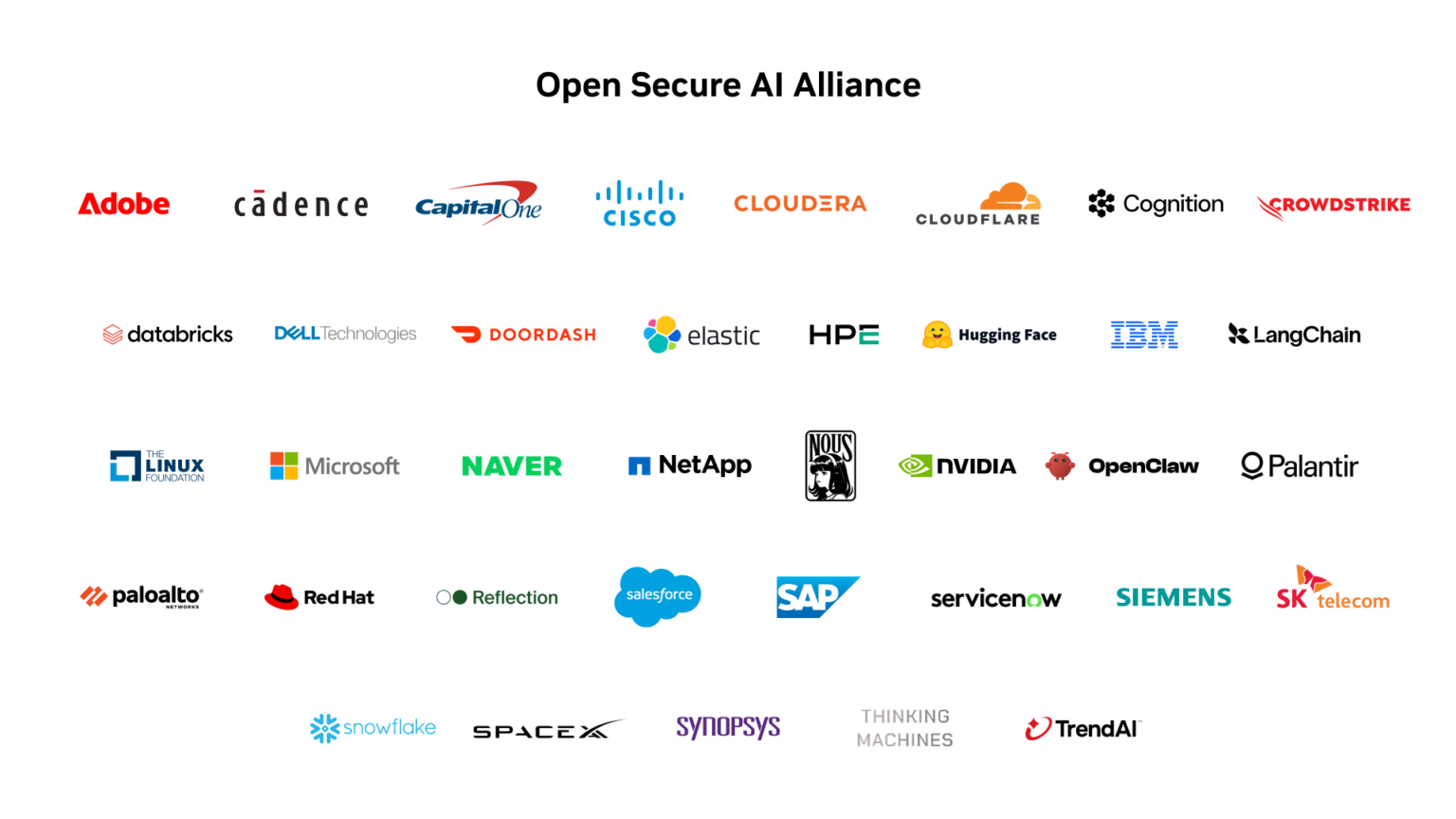
Artificial intelligence is rapidly becoming a core component of modern cybersecurity, but securing AI systems remains one of the industry’s biggest challenges. To address this, a coalition of technology companies, cybersecurity vendors, research organizations, and open-source communities has announced the Open Secure AI Alliance, an initiative focused on advancing open technologies for AI security and safety.
The alliance aims to promote collaborative development of tools, frameworks, and best practices that help organizations build, evaluate, and secure AI-powered applications.
Why the Alliance Matters
As AI becomes integrated into critical infrastructure, cloud platforms, enterprise software, and security operations, organizations face increasing pressure to ensure these systems are both trustworthy and resilient.
The Open Secure AI Alliance advocates for an open approach to AI security, arguing that transparency allows security professionals to inspect, validate, and improve defensive technologies rather than relying solely on proprietary solutions.
Supporters believe that open ecosystems encourage innovation while enabling organizations to maintain greater control over how AI is deployed in their environments.
Open AI for Cyber Defense
The alliance emphasizes that open AI technologies can play a key role in cybersecurity.
By making security models, evaluation frameworks, and development tools openly available, researchers and defenders can collaborate to detect vulnerabilities, improve safeguards, and respond more quickly to emerging threats.
According to the initiative, open AI should complement—not replace—commercial and closed AI models. Different security scenarios may require different approaches, and organizations should have the flexibility to choose the most appropriate technology.
Learning from Real-World Incidents
The announcement also highlights recent security incidents as examples of why organizations benefit from being able to deploy AI models on their own infrastructure.
In situations where rapid forensic analysis or incident response is required, locally controlled AI systems may provide greater flexibility than cloud-only services, especially when sensitive data cannot leave an organization’s environment.
The alliance argues that giving defenders access to adaptable AI technologies can improve response times during security investigations while reducing dependence on a single vendor.
Broad Industry Participation
The initiative brings together organizations from multiple sectors, including cloud computing, enterprise software, semiconductor manufacturing, cybersecurity, artificial intelligence, and open-source development.
Among the founding participants are major technology companies such as NVIDIA, Microsoft, Cisco, IBM, Red Hat, Cloudflare, Dell Technologies, Palo Alto Networks, Salesforce, SAP, Snowflake, Hugging Face, Elastic, HPE, Databricks, NetApp, and several AI research organizations and open-source communities.
The diversity of participants reflects a growing recognition that AI security requires collaboration across the entire technology ecosystem.
Advancing an Open Security Stack
Beyond language models, the alliance is focused on the broader AI application stack.
Areas of collaboration include:
- Identity and authentication for AI agents
- Secure execution environments
- AI safety evaluation frameworks
- Model integrity and secure distribution
- Vulnerability detection
- Secure software supply chains
- Governance and auditing
- Responsible AI development practices
Several participating organizations have also announced contributions to open-source projects related to AI safety, secure model deployment, identity management, and automated vulnerability analysis.
Policy and Regulation
The alliance also encourages policymakers to recognize open AI technologies as valuable defensive assets.
Rather than restricting open AI development, members argue that governments should support shared research, security testing, red-team exercises, evaluation datasets, and open infrastructure that strengthens AI resilience across industries.
According to the group, balancing innovation with responsible governance will be essential as AI continues to evolve.
Looking Ahead
The Open Secure AI Alliance represents another step toward building a more collaborative approach to AI security.
As organizations increasingly rely on autonomous systems and AI-powered applications, the need for transparent, auditable, and secure technologies is expected to grow.
Whether open or proprietary, the future of AI security will likely depend on cooperation between technology vendors, researchers, governments, and the cybersecurity community to develop standards and tools capable of protecting tomorrow’s digital infrastructure.
Want more articles and tutorials like this?
Get new tutorials, security alerts, and IT tips straight to your inbox.