Lenovo Project Swan: The ThinkBook That Grows Sideways
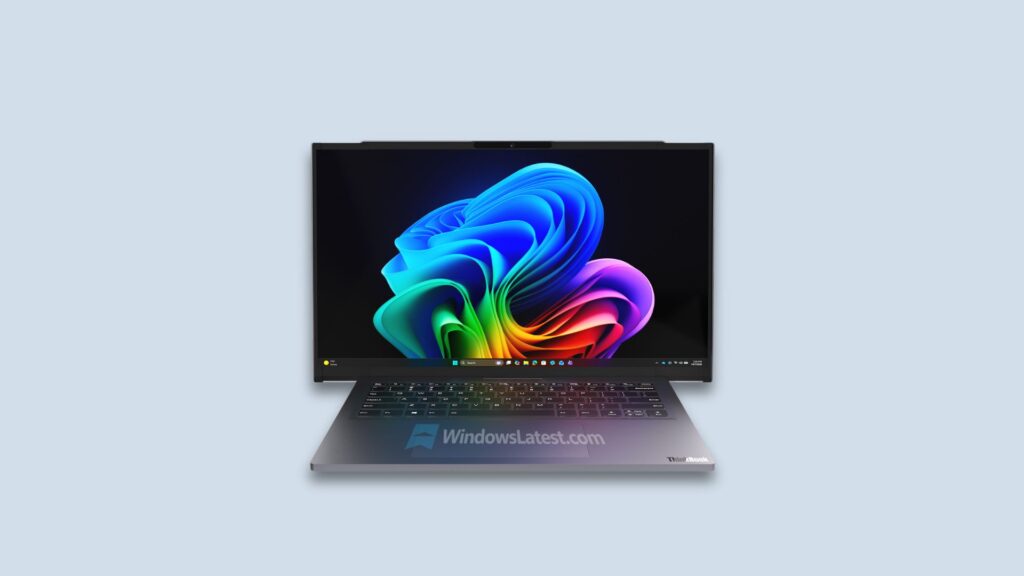
Table of Contents
- What Is Project Swan?
- How the Horizontal Expansion Works
- How It Compares to Previous Rollable Laptops
- What the Leaked Renders Reveal
- Why Horizontal Expansion Matters for Productivity
- When Will Project Swan Launch?
- Conclusion
What Is Project Swan?
Project Swan is Lenovo’s internal codename for a new ThinkBook concept. Unlike traditional laptops with fixed screens, this machine uses a rollable OLED panel that expands horizontally. Windows Latest published exclusive renders showing the device in both closed and expanded states.
The name “Project Swan” suggests pre-production hardware. Lenovo typically uses such codenames for concepts that may or may not reach store shelves. However, the company has a track record of turning rollable experiments into real products. The ThinkBook Plus Gen 6 Rollable started as a prototype and later hit the market at $3,299.
How the Horizontal Expansion Works
The mechanism borrows from Lenovo’s earlier rollable experiments. The flexible OLED panel stores excess screen material inside housings along both edges of the lid. When you want more space, motorized rails pull the hidden portions outward and flatten them into a continuous display.
This approach differs from foldable screens that bend in half. Rollable displays avoid creases because they curve around a gentle radius inside the housing rather than folding flat. The trade-off is mechanical complexity. Motors, guide rails, and tension systems must work reliably thousands of times.
The hinge also looks different. On Project Swan, the hinge sits shorter and more centered than a standard ThinkBook. This design makes room for the extending rails on either side. A full-width hinge would block the mechanism.
How It Compares to Previous Rollable Laptops
Lenovo has already shipped or demonstrated several rollable devices. Each solves a different problem.
ThinkBook Plus Gen 6 Rollable
This laptop expands vertically. Its 14-inch OLED stretches up to 16.7 inches, adding roughly 50% more display area. Users trigger the extension with a keyboard shortcut or an upward hand gesture. It works well for scrolling long documents, coding with more lines visible, or stacking windows vertically.
Legion Pro Rollable
Lenovo demonstrated this gaming concept at CES 2026. Its 16-inch OLED expands horizontally to 21.5 inches and eventually 24 inches. The extra width suits ultrawide gaming and immersive media. However, Lenovo has no retail plans for this concept yet. It remains a proof of concept with hardware up to a GeForce RTX 5090 Laptop GPU.
ThinkPad Rollable XD
This concept stretches vertically from 13.3 to 16 inches. It pairs the flexible OLED with a partially transparent rear cover, giving it a distinct look. Like the Legion Pro, it has not reached commercial production.
Project Swan sits between these experiments. It takes the horizontal expansion from the Legion Pro but targets business productivity like the ThinkBook Plus Gen 6.
What the Leaked Renders Reveal
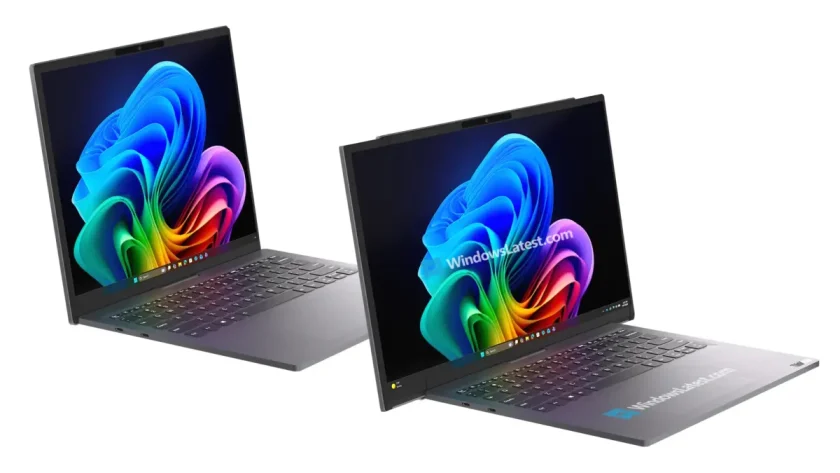
Windows Latest shared high-resolution images showing several telling details.
From the front, Project Swan looks like a conventional ThinkBook. A centered webcam sits at the top of the display bezel. Two USB-C ports line the left edge. The right side remains unseen in the leaks, so additional ports are still unknown.
The rear view tells the real story. A dual-tone back cover features visible cutouts on both the left and right sides. These openings likely house the motorized rail mechanism. The Lenovo logo sits centered on the lid.
One odd detail stands out. The renders show no Copilot key on the keyboard, yet the taskbar displays the Recall icon active near the system tray. This could indicate early marketing renders rather than final hardware. Microsoft has also tested letting users reassign the Copilot key, so this may not mean much.
Why Horizontal Expansion Matters for Productivity
Vertical expansion helps with reading and scrolling. Horizontal expansion solves a different set of problems.
Side-by-Side Multitasking
A wider screen lets you place two or three windows next to each other without overlap. You can keep a browser, spreadsheet, and chat app visible simultaneously. This setup mirrors the desktop monitor experience that many office workers prefer.
Video and Audio Editing
Editors benefit from longer timelines. A horizontally expanded display shows more tracks and clips at once, reducing the need to scroll horizontally through projects. Color grading panels and toolbars also fit more comfortably.
Data Analysis and Coding
Developers and analysts often work with wide tables, large codebases, or multiple terminal windows. Extra horizontal space reduces window switching and improves workflow speed.
No External Monitor Needed
The biggest win is portability. You get ultrawide workspace without carrying a separate portable monitor, cables, and stand. For frequent travelers and remote workers, this convenience matters.
When Will Project Swan Launch?
Lenovo has not confirmed any launch date or pricing. The leaks suggest the concept is close to an official unveiling, possibly at IFA next month or at Lenovo Innovation World 2026.
The company appears to be lining up several announcements. Rumors point to Lenovo’s thinnest ThinkBook yet, an NVIDIA RTX Spark-powered convertible, and a redesigned IdeaCentre All-in-One. Project Swan may share the stage with these devices.
Pricing remains a mystery. The ThinkBook Plus Gen 6 Rollable launched at $3,499 before dropping to $3,299. A horizontal rollable would likely sit in a similar premium range given the complex mechanism and OLED panel.
Durability questions also linger. Rollable displays face more mechanical stress than fixed screens. Lenovo must prove the motors, rails, and flexible panel can withstand daily use for years. Until independent testing happens, buyers should view this as cutting-edge tech with cutting-edge risk.
Conclusion
Lenovo Project Swan represents the next logical step in rollable laptop design. After proving vertical expansion works with the ThinkBook Plus Gen 6, the company now explores horizontal growth for business users. The leaked renders show a polished concept with motorized rails, a centered hinge, and a familiar ThinkBook aesthetic.
Whether this becomes a real product depends on engineering reliability and market appetite. Rollable laptops remain expensive niche devices. But for professionals who crave ultrawide productivity in a portable package, Project Swan offers a compelling glimpse of what comes next.
Source: Windows Latest
Want more articles and tutorials like this?
Get new tutorials, security alerts, and IT tips straight to your inbox.