US Tech Outages: Did AI-Driven Security Patches Cause a Wave of System Failures?
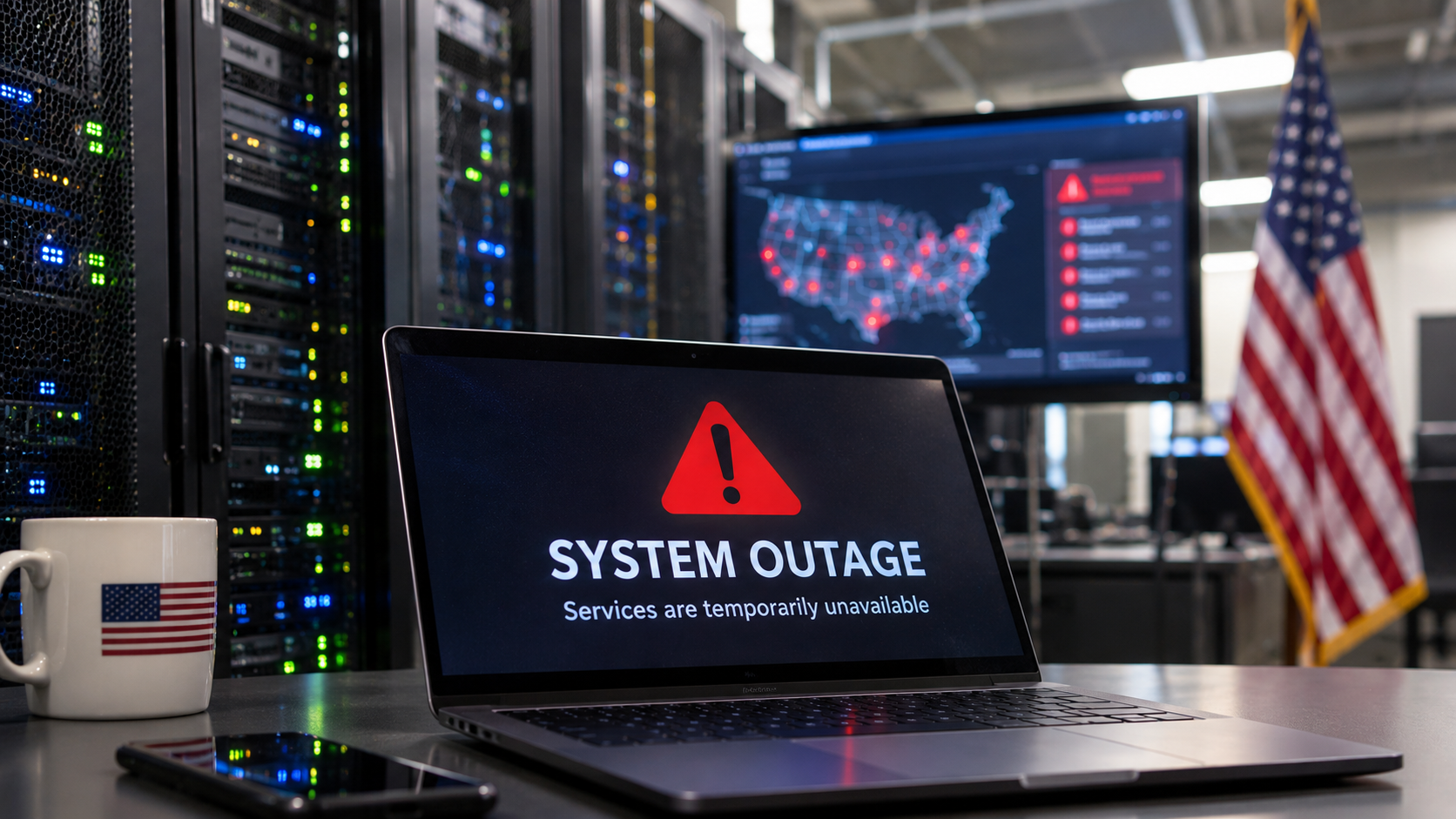
The United States has experienced a series of major technology disruptions affecting airlines, banks, government agencies, and cloud services. While cyberattacks initially raised concerns, a new report suggests a different explanation: rushed software fixes for security vulnerabilities discovered by artificial intelligence (AI) may have contributed to the outages.
If confirmed, this situation could highlight an unexpected challenge in cybersecurity: AI can help organizations discover vulnerabilities faster, but rushing to fix them can introduce new problems.
What Happened?
According to a report published by The Washington Sun on November 17, 2026, executives from Wall Street and officials from the National Security Agency (NSA) told members of Congress that rushed security patches may have contributed to several recent outages.
The report, which cites three anonymous sources, suggests that AI models identified large numbers of security vulnerabilities, creating pressure on organizations to deploy fixes quickly.
However, these updates may have overwhelmed systems that were not designed to handle so many changes at once.
The central concern is that AI-assisted vulnerability discovery is accelerating faster than some organizations can safely test, deploy, and manage security updates.
Major Outages Reported Across the US
Several incidents occurred between November 12 and November 17, affecting critical services:
| Date | Organization | Reported disruption |
|---|---|---|
| November 12–13 | Microsoft | Outlook and Microsoft 365 service disruptions |
| November 13 | FAA | Nationwide flight ground stop following network problems |
| November 16 | JPMorgan Chase | Software bug disrupted some banking services |
| November 17 | NSA | Temporary disruption affecting internal classified networks |
| November 17 | Apple | Internal update disrupted iCloud, Apple Pay and other services |
These incidents did not all have the same confirmed cause.
For example, Apple attributed its disruption to an internal update, while the NSA publicly described its incident as a problem during scheduled maintenance. Reuters+1
How Could AI-Driven Patching Cause Outages?
AI tools are becoming increasingly useful in cybersecurity. They can help security teams scan code, identify vulnerabilities and detect weaknesses that traditional security tools might miss.
However, finding a vulnerability is only the first step. Organizations must still test the proposed fix, check compatibility and deploy it without disrupting production services.
A rushed patching process can introduce several risks:
- Compatibility issues: Updates may conflict with existing applications or infrastructure.
- Configuration errors: Changes to network or system settings can affect other services.
- Insufficient testing: Emergency patches may reach production before engineers complete proper testing.
- System overload: Deploying multiple updates simultaneously can increase resource usage and create unexpected failures.
This creates a difficult situation: organizations must patch vulnerabilities quickly to prevent cyberattacks, but deploying fixes without sufficient testing can also put their infrastructure at risk.
Is AI Really Responsible?
Not necessarily.
The Washington Sun report relies on anonymous sources describing private discussions with lawmakers. It does not provide technical evidence proving that AI-generated vulnerability fixes caused all the outages.
Other reporting also highlights the importance of distinguishing between separate technical incidents.
For example, the FAA disruption was not linked to its new AI-powered aviation system, according to government officials and the company behind that technology. The agency’s investigation focused on network communication problems. The Washington Post
Similarly, experts interviewed by Axios warned against assuming that several outages occurring within days must share a single cause. They pointed to software defects, infrastructure limitations and weaknesses in change management. Axios
Therefore, AI-assisted patching remains a possible contributing factor, not an established explanation for the entire wave of outages.
What Should Organizations Learn From This?
These incidents highlight an important lesson for IT teams and cybersecurity professionals: security updates must be fast, but they must also be safe.
Organizations should consider several best practices:
- Test patches before deployment: Validate updates in staging environments before applying them to production.
- Use phased deployments: Roll out changes gradually instead of updating entire infrastructures simultaneously.
- Maintain rollback procedures: Prepare a recovery plan if an update causes unexpected problems.
- Monitor systems continuously: Track CPU, memory, network traffic and application errors after every deployment.
- Keep legacy infrastructure updated: Older systems require particular attention because they may struggle with modern workloads and configurations.
AI can accelerate vulnerability discovery, but human oversight, proper testing and reliable change management remain essential.
Conclusion
The recent wave of US technology outages raises an important question about the growing role of artificial intelligence in cybersecurity.
AI can identify vulnerabilities faster than traditional methods, but organizations must have the infrastructure and processes needed to fix them safely.
Although there is no confirmed evidence that AI-driven patching caused all the reported incidents, the situation highlights a growing challenge: the faster we identify security problems, the more important it becomes to manage the fixes carefully.
The goal should not simply be to patch vulnerabilities faster, but to improve security without compromising system availability.
Frequently Asked Questions
Did AI cause the recent US outages?
There is no definitive technical evidence confirming this. A Washington Sun report suggests rushed fixes for AI-discovered vulnerabilities may have contributed to some incidents.
Can security patches cause system outages?
Yes. Poorly tested updates, configuration mistakes and software compatibility problems can disrupt production systems.
Does AI make cybersecurity more dangerous?
Not necessarily. AI improves vulnerability detection and security analysis, but it can also accelerate the discovery of weaknesses and increase pressure on organizations to deploy fixes quickly.
How can companies avoid outages during security updates?
By testing patches, deploying them gradually, monitoring infrastructure and maintaining reliable rollback procedures.
Sources and Further Reading
- The Washington Sun – Bank CEOs, NSA Tell Congress That AI-Driven Patches Are Behind Outages (Original report)
- Axios – Why the internet suddenly broke all at once
- Reuters – Apple works to restore services after outage caused by internal update
- The Guardian – National Security Agency network for internal communications goes down
- The Washington Post – Questions swirl around FAA’s new SMART AI system
Want security alerts before they hit your servers?
We flag critical CVEs and show you how to check and patch them, in plain language and with commands you can run today.
- Critical CVE alerts with fixes
- Hardening checklists
- Defence and lab guides
No spam. Unsubscribe anytime.